Achievement Unlocked
Lang verschollenen Tux gefunden
Der Geist der CLT2026 lebt! 🐧✨
Yesterday, on August 12, 2026, an astronomical event of a lifetime took place over Europe: the great European solar eclipse. While the path of totality swept over Greenland, Iceland, and northern Spain, we in Germany were treated to one of the deepest partial solar eclipses in decades.
At our observation site in Saxony, the new moon obscured up to 86.8% of the solar disk – a rare celestial spectacle during prime evening time just before sunset.
What started as a family trip to the edge of the fields and a planned community stream turned into one of my most intense astro days so far: from a well-attended Twitch livestream and a magical eclipse maximum low on the western horizon to a midnight Perseid hunt at the roof window – and a hefty dose of frustration over the ruthless destruction of our night sky by commercial satellite mega-constellations.
Since the eclipse reached its peak around 8:10 PM CEST – when the Sun was already hanging just ~6 degrees above the western horizon –, it was quickly obvious: back home between houses and tall trees, we would miss the maximum entirely.
Without hesitation, I packed up my mother and aunt, tossed the smart telescope (ZWO Seestar S30 Pro), a compact tripod, power banks, and the magnetic solar filter into the trunk, and set out in search of an unobstructed horizon.
We ended up at a quiet spot at the edge of a field near Colditz (renowned for its historic Colditz Castle) in Saxony at coordinates 51.174895, 12.759456. The view to the west was completely clear – an endless summer sky, gently rustling grain fields, and an unobstructed line of sight down to the evening horizon.
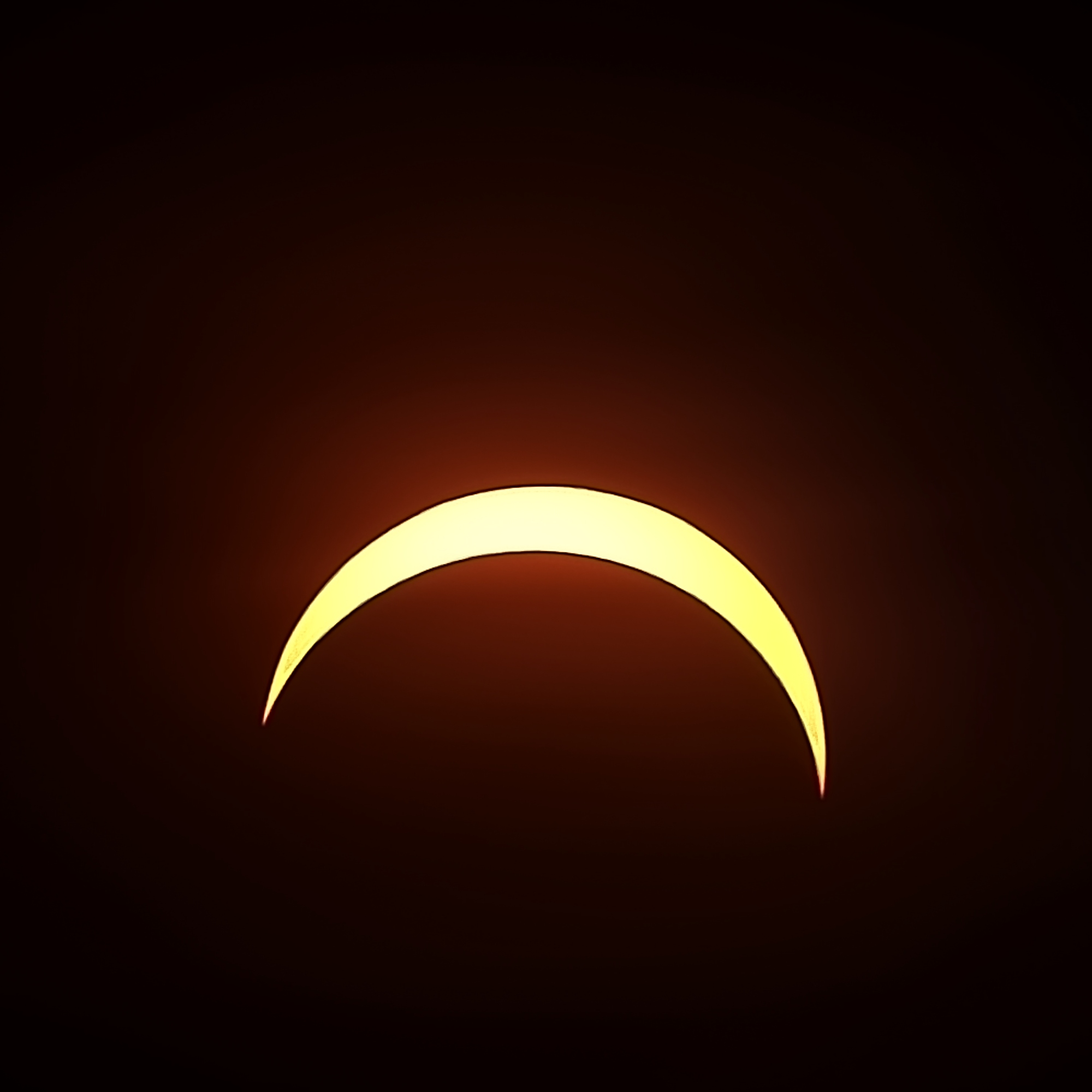
Setting up went as swiftly as usual thanks to the Seestar: deploy the tripod, level it, attach the magnetic solar filter, and launch Solar Mode via the smartphone app. After a quick calibration, tracking locked onto the solar disk, and we were able to watch live as the dark silhouette of the Moon began clipping into the upper rim of the Sun, steadily devouring our home star piece by piece.
The joint livestream with Twitch streamer das__mufflon was no spontaneous accident: we had planned the collaboration the day before and thoroughly stress-tested the RTSP/RTMP video feed over my mobile cellular setup in advance.
Right on time for first contact, the connection held solid: the Seestar streamed its crisp solar feed straight from Saxony into her studio, and Mufflon brought the stream live to her audience.
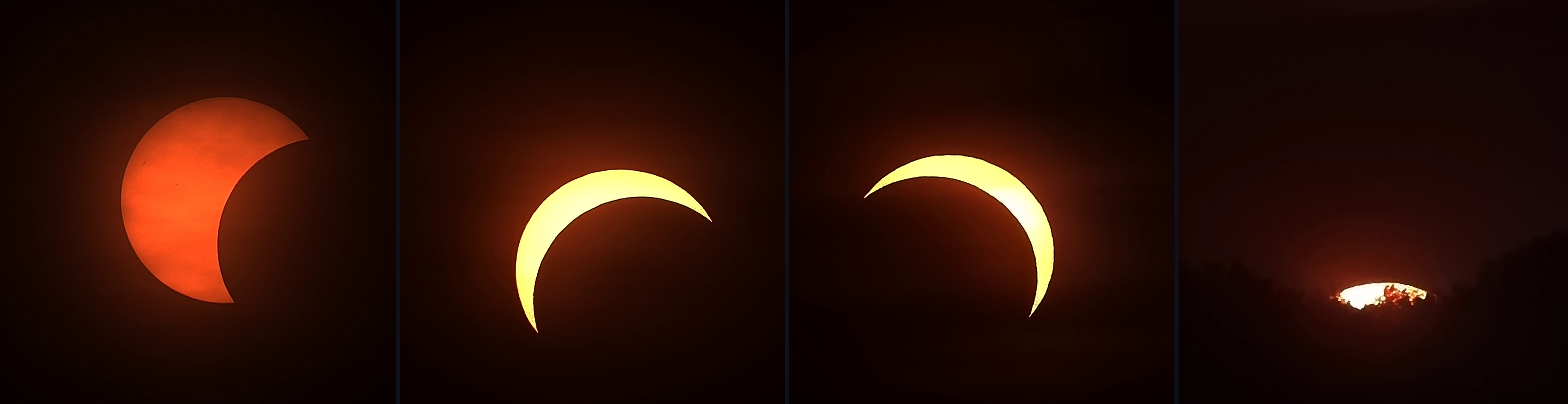
What unfolded next was an absolute blast: genuine excitement erupted across the Twitch chat. The telescope was spontaneously dubbed “Franky’s Super Hubble Telescope” by the community, and for over an hour, viewers watched mesmerized as the golden solar disk narrowed into a razor-sharp crescent.
A particularly neat touch: community member der_bober actively clipped highlight reels of the best transit moments along the way. It was a fantastic experience seeing how modern astrophotography combined with mobile internet can unite people hundreds of kilometers apart in sharing a single celestial phenomenon.
Around 8:00 PM CEST, the surrounding atmosphere shifted noticeably. Even though the Sun remained in a cloudless sky, the daylight turned strangely pale, silvery, and metallic. The summer warmth gave way to a distinct chill, ground shadows cast unnaturally sharp outlines, and the birds in the surrounding fields went quiet.
At 8:10 PM CEST, the peak arrived: 86.8% of the Sun’s surface was obscured by the Moon.
All that remained in the sky was an extremely slender, blazing crescent. Through the solar filter of the Seestar S30 Pro, it made for a breathtaking sight: along with the jet-black lunar curvature, active sunspot groups AR4485 and AR4482 stood out distinctly across the remaining solar disk.
By stacking 15 short-exposure individual frames (Lucky Imaging), I was able to effectively cancel out the severe atmospheric turbulence near the horizon and secure a razor-sharp master frame of this rare moment.
To demonstrate precisely how this celestial choreography between Sun, Moon, and Earth works – and why we observed a partial eclipse in Saxony while further southwest in Spain totality turned day into night –, I coded this interactive 2-in-1 simulator:
Observation Site: 51.1749° N, 12.7595° E (Near Colditz) • August 12, 2026
Once the eclipsed Sun sank behind distant hills and the equipment was packed away, the astronomical day was far from over. During the night from August 12 to 13, the annual Perseid meteor shower reached its activity peak.
Back home, I aimed the Seestar out of the open roof window toward the northeastern sky and kicked off an automated time-lapse series consisting of 197 wide-angle exposures (10 seconds per sub-frame).
The yield of genuine meteors was fantastic! Two exceptionally bright fireballs (bolides) streaked straight through the field of view, leaving brilliant ionization trails lingering in the upper atmosphere.
Here are the highlights from our overnight Perseid session:
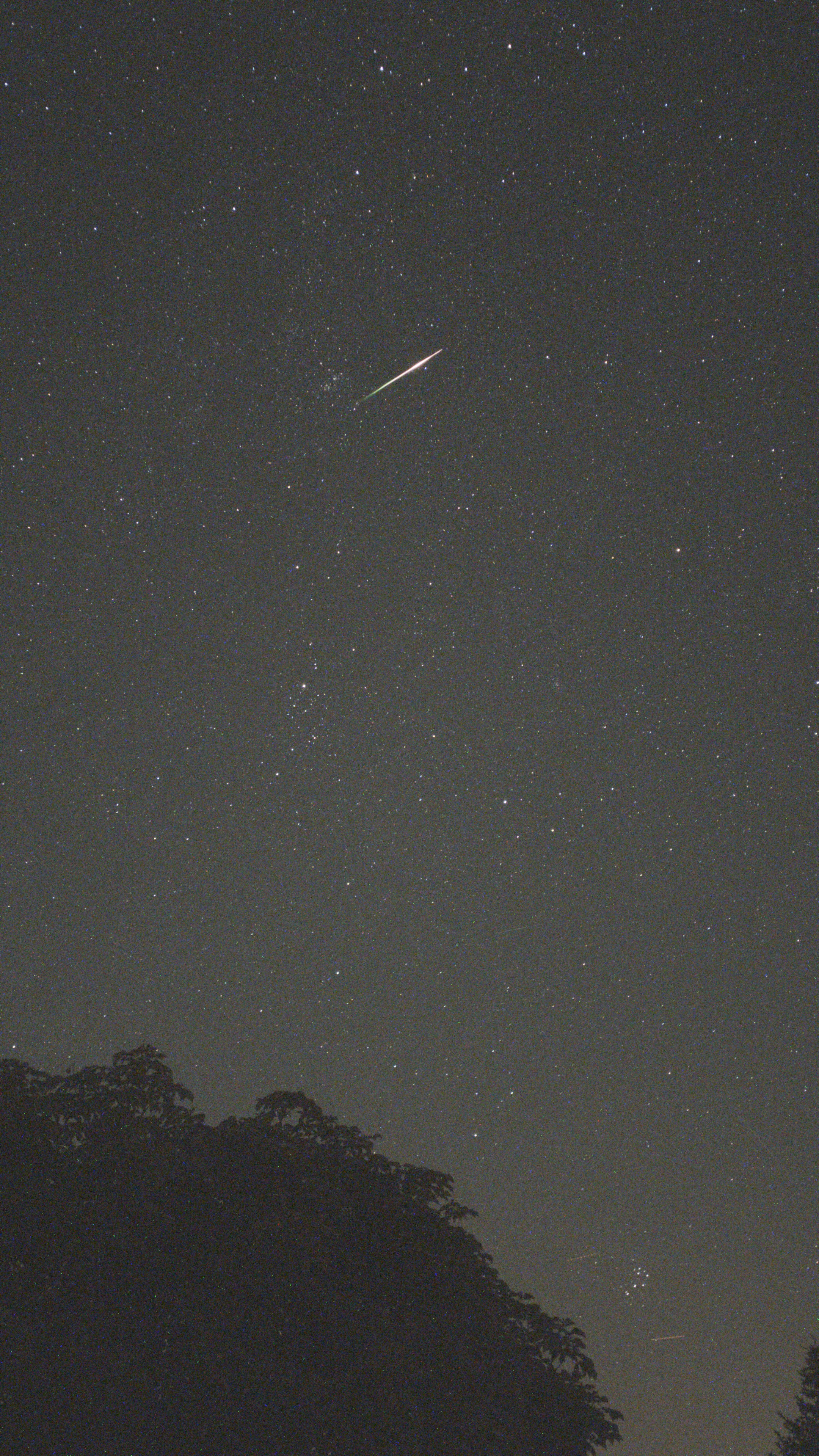
Fireball 1 (00:26:40 CEST): Extremely bright luminous trail with distinct green coloration from ionized magnesium.
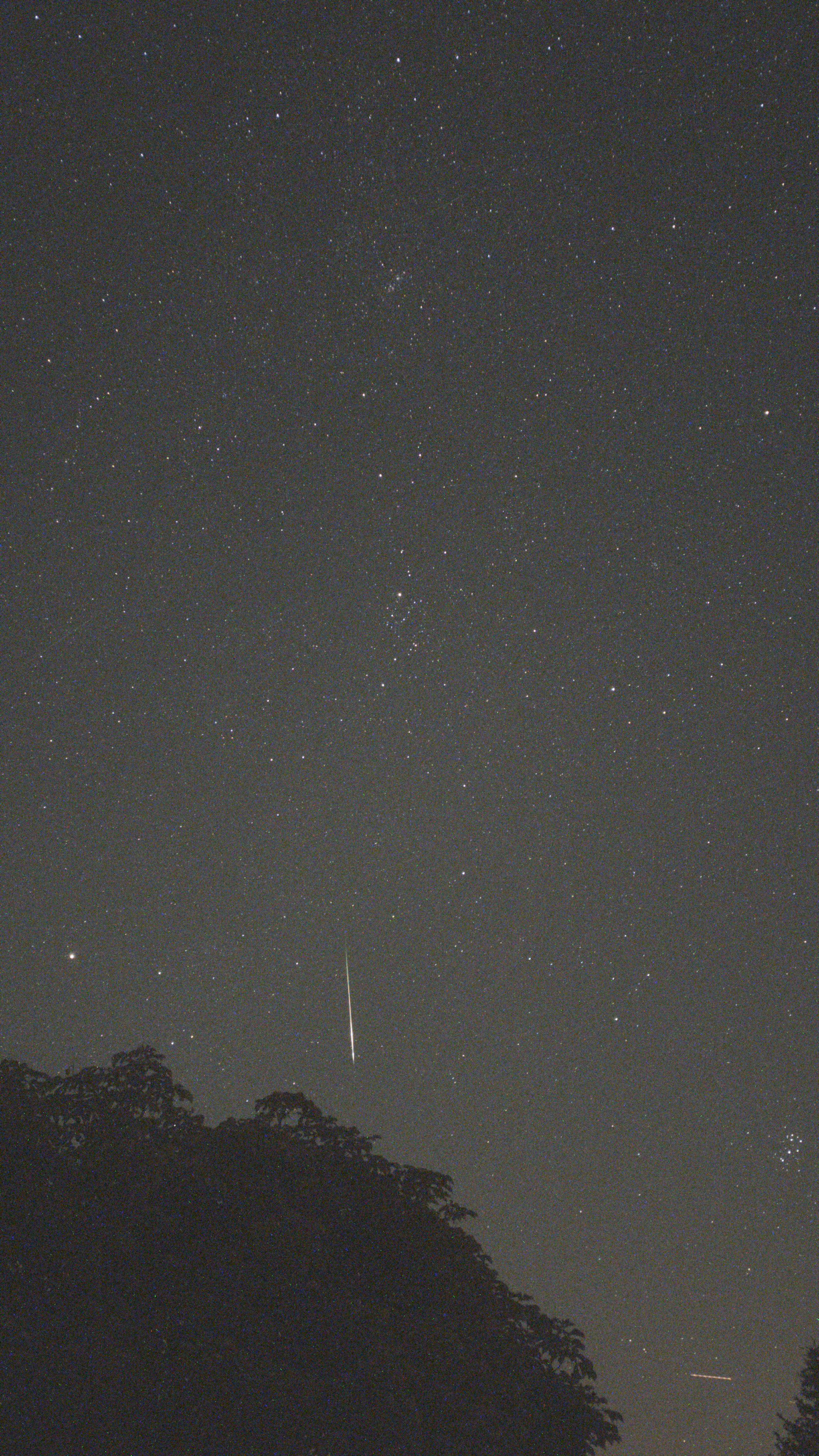
Fireball 2 (00:59:54 CEST): Majestic bolide featuring a prominent brightness burst (*terminal flare*) right before disintegrating.
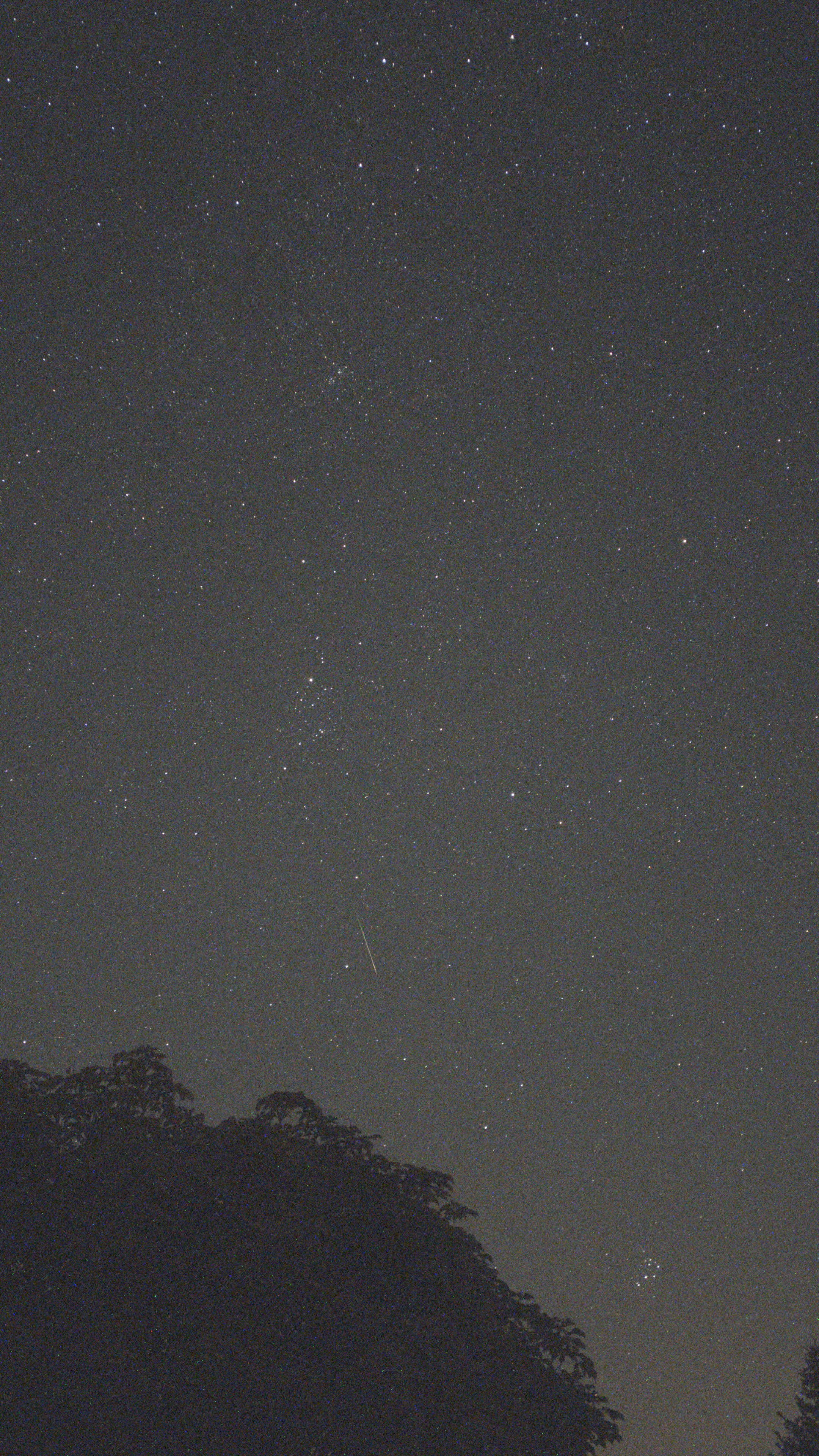
00:28:57 CEST
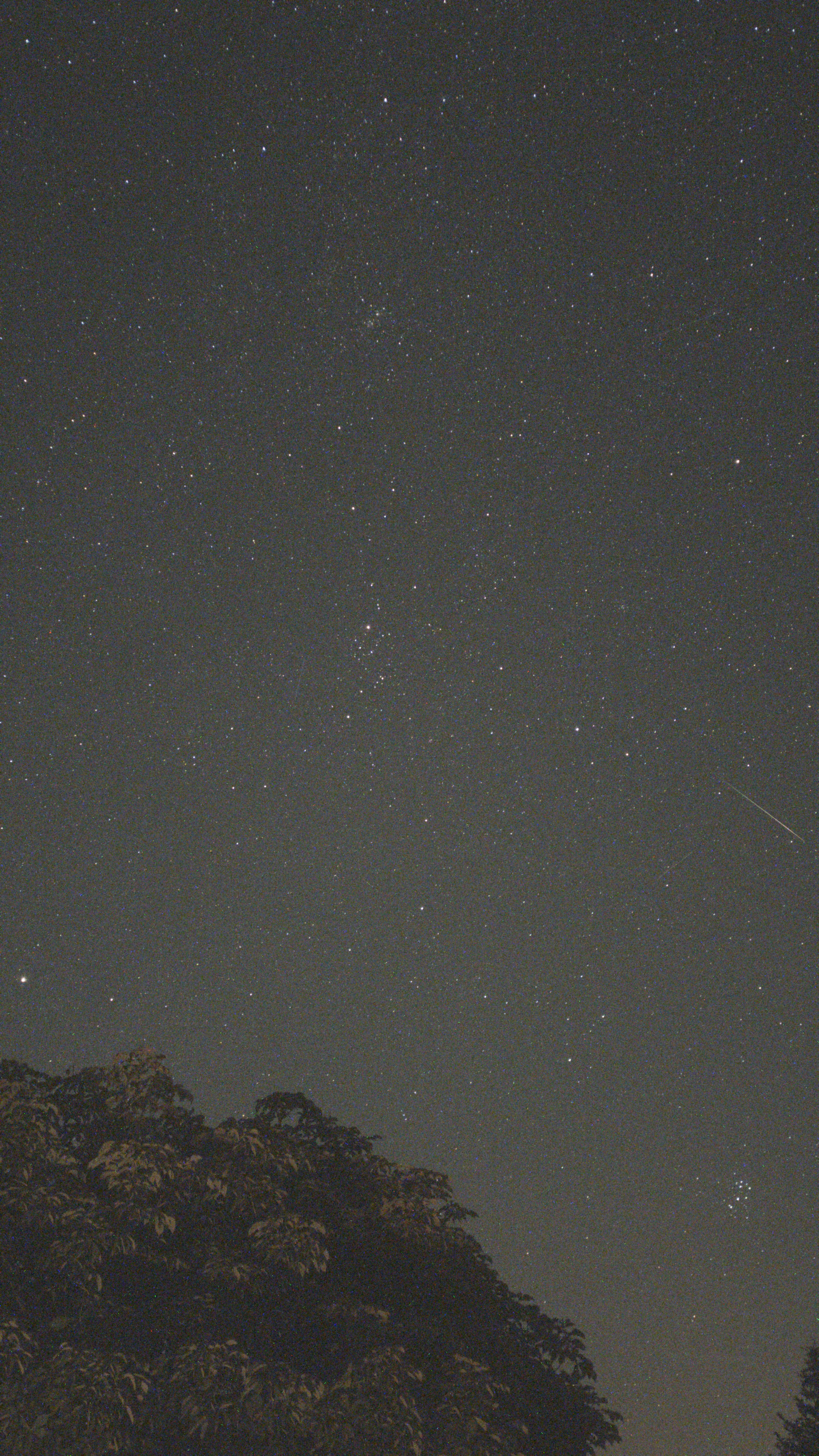
00:48:35 CEST
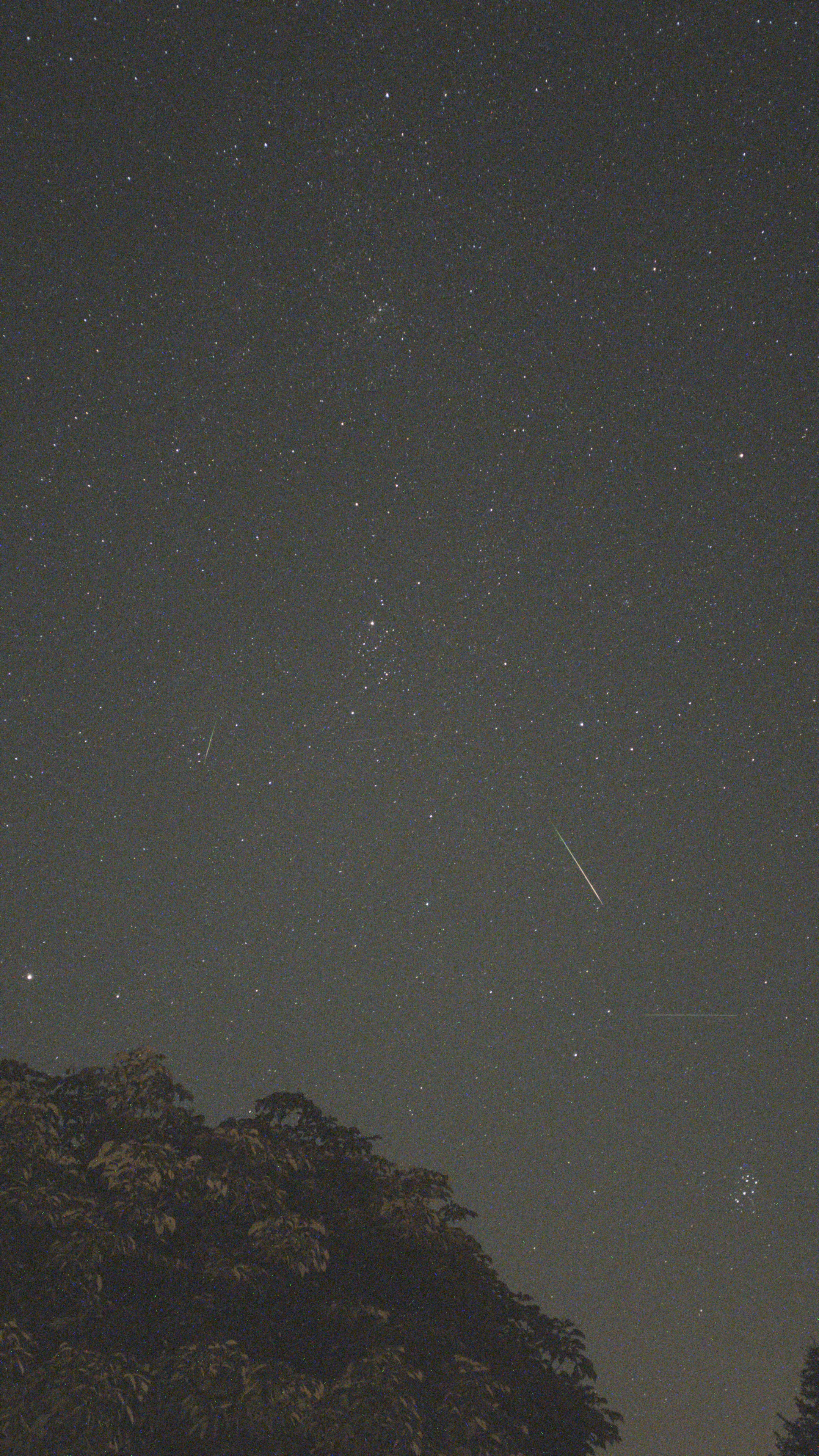
00:49:59 CEST
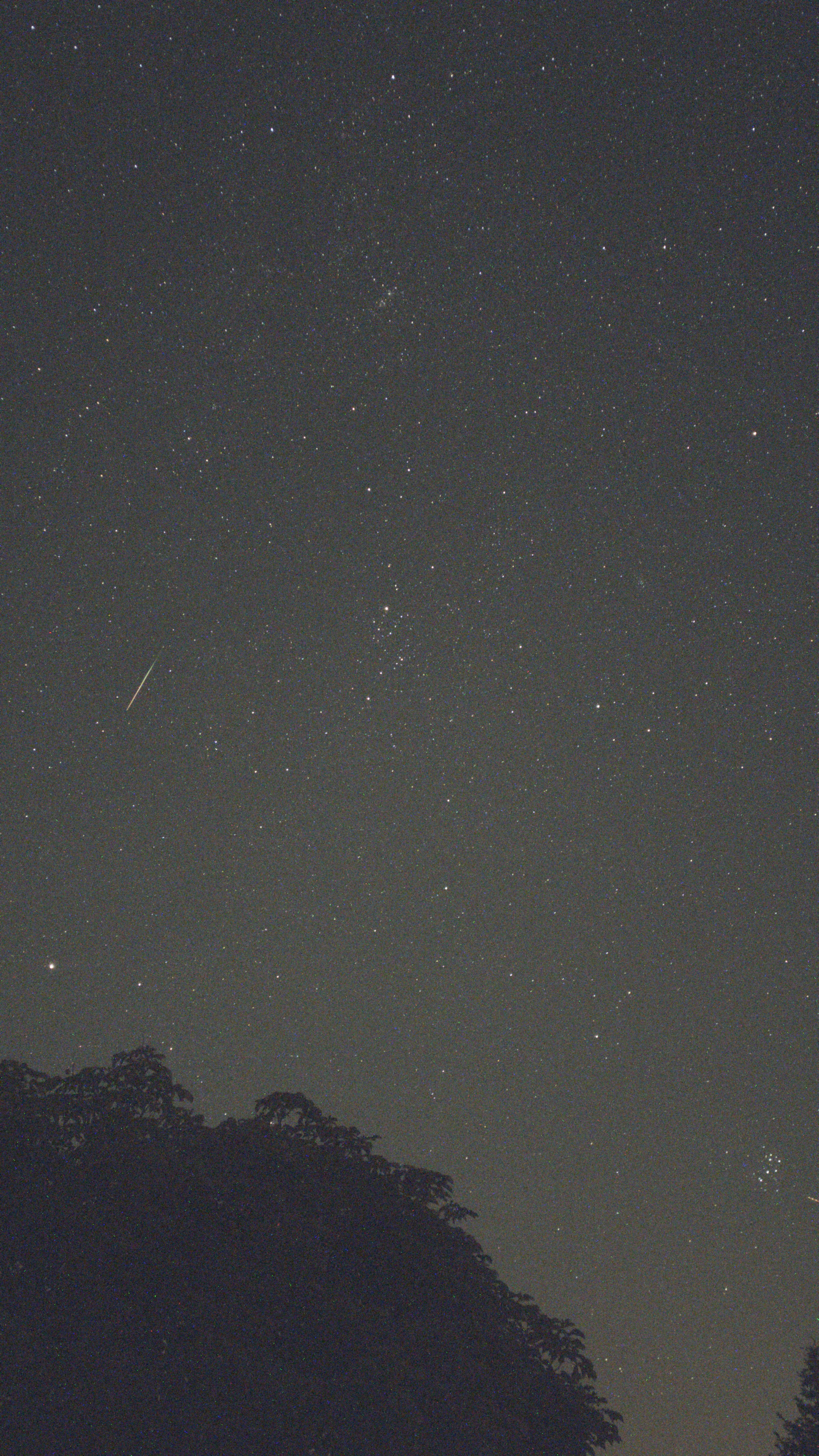
00:55:07 CEST
As magnificent as the solar eclipse and shooting stars were – analyzing the raw data from that night shifted our enthusiasm into sheer disbelief and anger.
Reviewing the 197 raw wide-angle images frame by frame revealed the startling scale of industrial satellite pollution in low Earth orbit:
That means: Almost 30 percent (29.44%) of all captured frames were sliced through and contaminated by artificial satellite streaks!
To make this issue tangible, I stacked all 58 affected individual exposures into a single composite (Maximum Intensity Projection). The result speaks for itself:
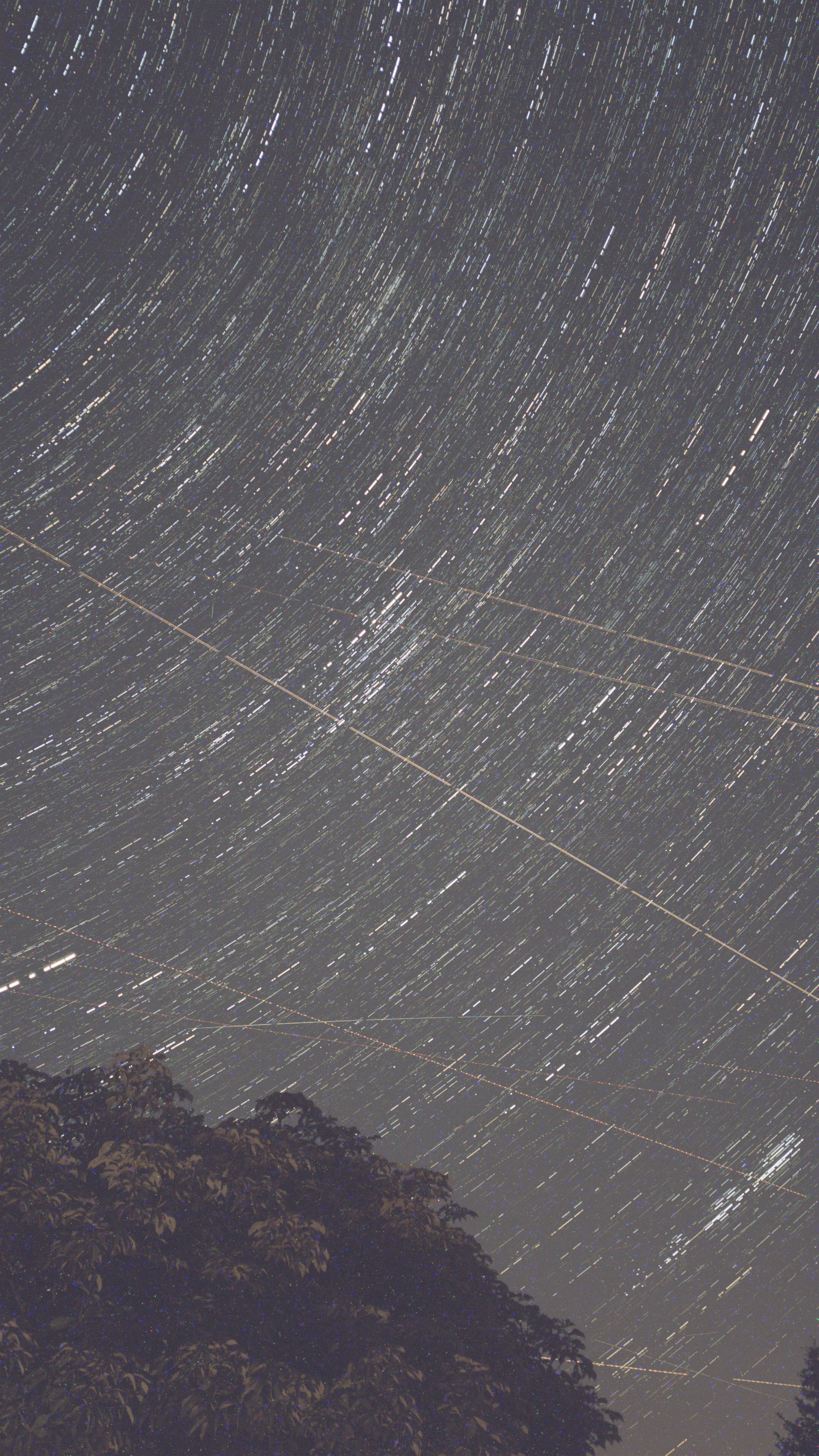
What you see here is no sci-fi illustration, but the sober reality of our night sky in August 2026. Within just half an hour, dozens of satellites from mega-constellations (such as Starlink, Kuiper, and others) traversed the telescope’s field of view.
Bright, piercing streaks cut in all directions across the star field, drowning out faint deep-sky targets and compromising both scientific research and astrophotography data. Anyone wanting to visualize the alarming scale of these satellite swarms in real time should take a look at satellitemap.space – low Earth orbit has turned into a dense, artificial spiderweb.
The night sky is humanity’s oldest shared cultural heritage. For millions of years, people looked up unimpeded into the depths of the universe. In less than a decade, commercial corporations are turning this pristine view into a sprawling, glaring industrial zone in low Earth orbit – with no meaningful international regulations, no effective limits on surface reflectivity, and zero regard for ground-based astronomy.
While modern stacking algorithms like Kappa-Sigma Clipping help filter out linear trails in deep-sky astrophotography, they offer zero protection for wide-angle time-lapses, meteor watches, asteroid early-warning systems, or spectroscopic sky surveys: Whatever is blinded by a satellite trail is irretrievably lost.
We urgently need binding international regulations for satellite operators: low-reflectivity coatings, coordinated orbital orientation, and a dramatic reduction in unregulated mass launches.
A successful astronomical observation – especially for a celestial event occurring low on the horizon like this solar eclipse just before sunset – hinges entirely on choosing the right location. When the Sun is only a few degrees above the horizon, even a distant tree line, power lines, or gentle terrain elevation can obscure the critical minutes of eclipse maximum.
To leave nothing to chance during preliminary location scouting, I took panorama test shots of potential sites with my smartphone on August 5, 2026, and processed them using a custom Python workflow.
With the projected trajectory overlaid directly onto the landscape, it was immediately apparent when the Sun would dip behind particular treetops or hills, and precisely where an unobstructed line of sight for the eclipse maximum was guaranteed:
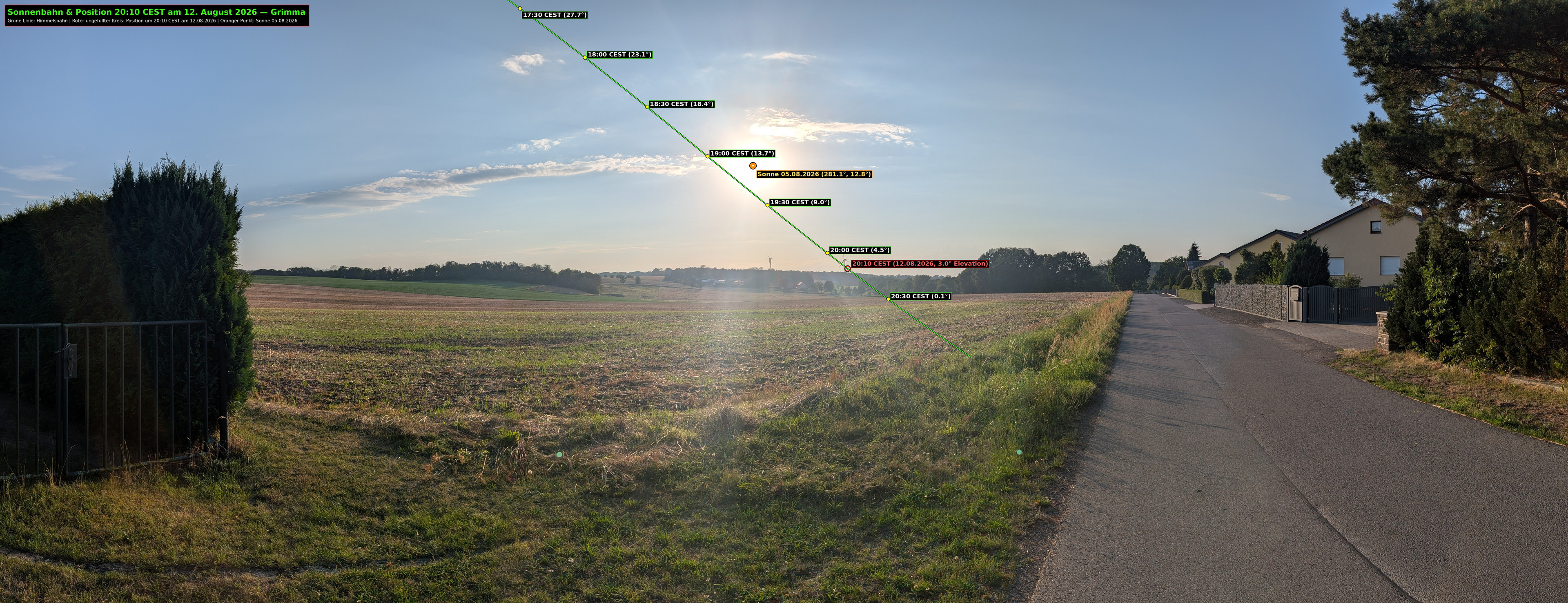
Scouting Location 1: Simulation of the eclipse solar trajectory plotted across the horizon.
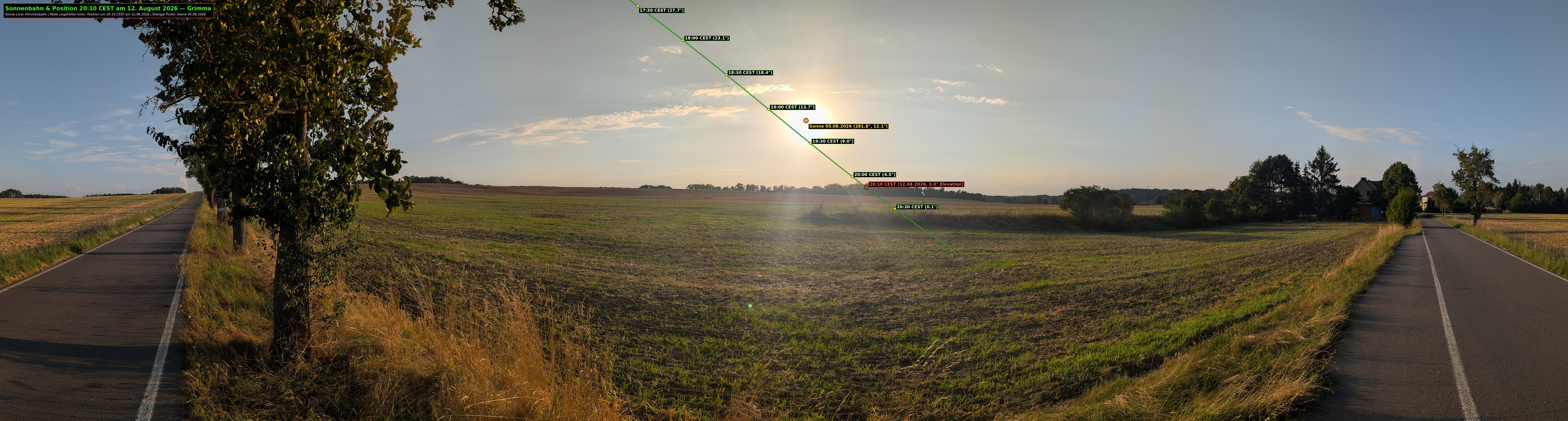
Scouting Location 2: Wide-angle line-of-sight analysis to safeguard against local horizon obstacles.
This data-driven scouting method provided complete confidence on August 12 to head directly to the field edge near Colditz, guaranteeing an unobstructed view right down to the evening horizon.
August 12, 2026, will stay with me for a long time. On one side stands the overwhelming experience in nature at the edge of the fields, the shared joy of observing together with my mother and aunt, and the wonderful response in the Twitch stream with the community of das__mufflon.
On the flip side is the sobering realization of how acutely endangered our night sky already is by the “Wild West” in Earth orbit today.
All the more reason to get outside, look up, document these phenomena, and stand up to protect our unobstructed view of the stars.
Lang verschollenen Tux gefunden
Der Geist der CLT2026 lebt! 🐧✨
Ich bin Frank. Ein Informatiker und Funkamateur aus Deutschland. Außerdem reise ich gern nach Japan.
By Frank Tornack,
Updated on:
Screen Burn-In
Glückwunsch! Deine Pixel sind jetzt offiziell eins mit meiner Website. 📺✨