Achievement Unlocked
Lang verschollenen Tux gefunden
Der Geist der CLT2026 lebt! 🐧✨
In my first blog post about the Seestar S30 Pro, I documented its “first light” under a clear night sky. However, one important accessory was left untouched in the carrying case during that initial night session: the solar filter.
On the afternoon of July 14, 2026, the weather finally turned sunny, giving me the perfect opportunity to test the smart telescope during the day and catch a glimpse of our home star.
Observing the sun carries extreme risks. Pointing a telescope at the sun without proper protection will instantly destroy the camera sensor (and cause blindness if viewed directly with the human eye). The Seestar S30 Pro features a highly sensitive dual-camera system (Sony IMX585 & IMX586). Without a filter, the optics would literally melt the sensor.
ZWO includes a compact solar filter with the Seestar S30 Pro. The filter itself consists of a safe solar attenuation film mounted in a round plastic frame.
I particularly like the mechanical design: the frame is not screwed on or attached with a friction ring; instead, it features a magnetic mount. You simply hold the filter in front of the Seestar’s lens, and it snaps precisely and securely into place. This has two key benefits:
Daytime setup is just as simple as the nighttime process. This time, however, I used the small tripod included in the package and set up the telescope relatively close to the ground. After powering it on and connecting to the Seestar app, you select the Solar Mode.
Before the telescope makes a single move, the app displays a prominent safety warning prompting the user to attach the solar filter. The process only continues after confirmation.
Since the telescope cannot use stars for orientation during the day, it relies on its internal compass and the smartphone’s GPS data to find the sun.
During my test in the late afternoon of July 14, I captured two nice shots that showcase the capabilities of the Seestar S30 Pro.
For the first image, I used the digital zoom in the app to crop in on a specific detail near the edge of the sun.
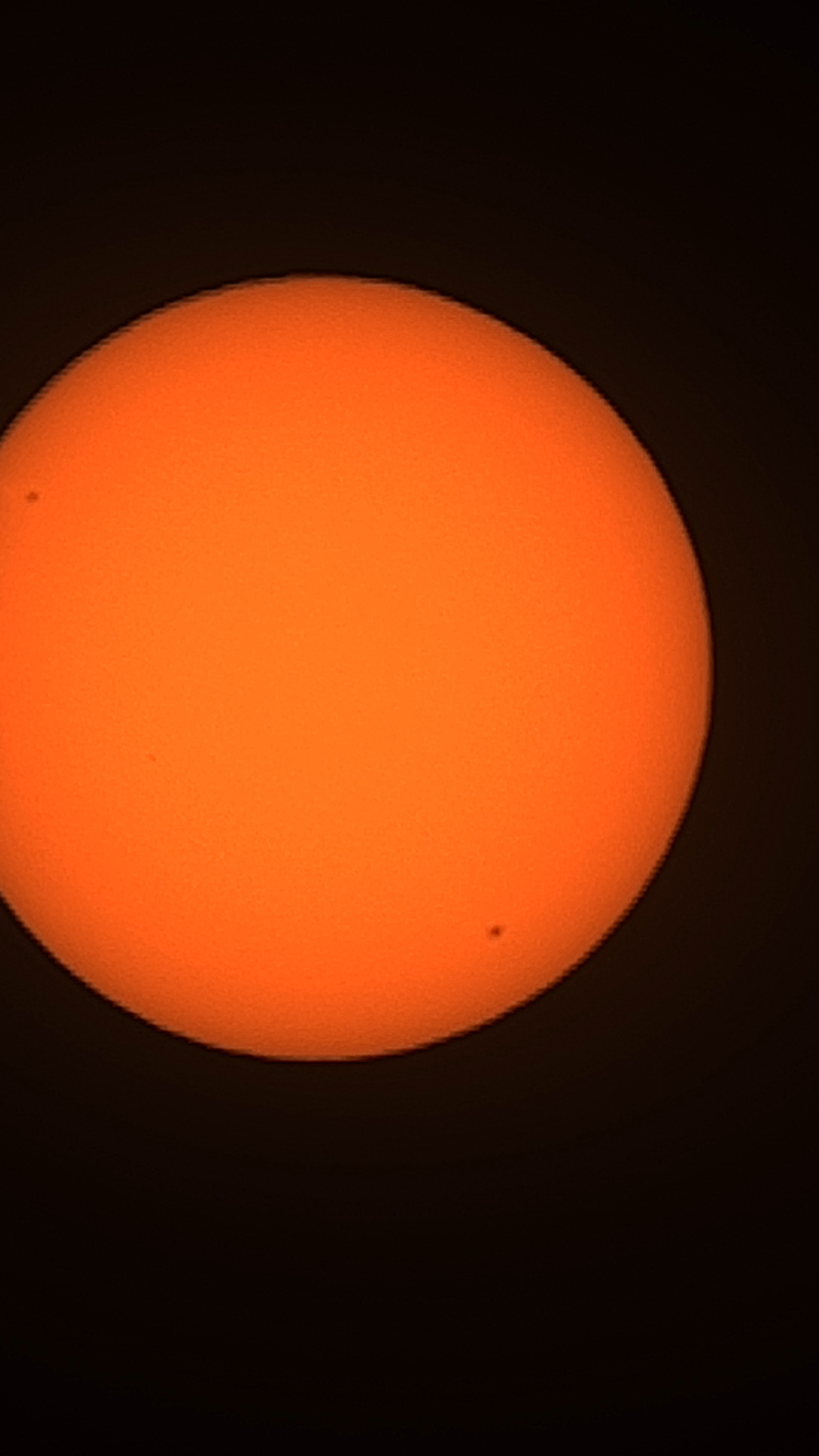
This shot shows a highly prominent, active sunspot group near the right edge (southwestern solar horizon). Cross-referencing current space weather data, this is the active region AR4485. At the time of capture, it was rotating out of view over the western horizon of the sun. The dark core (the umbra) and the slightly lighter, fibrous border (the penumbra) are clearly visible. To the left (closer to the center), another slightly smaller structure can be seen.
A few minutes later, I took a shot without digital zoom to capture the entire sun.
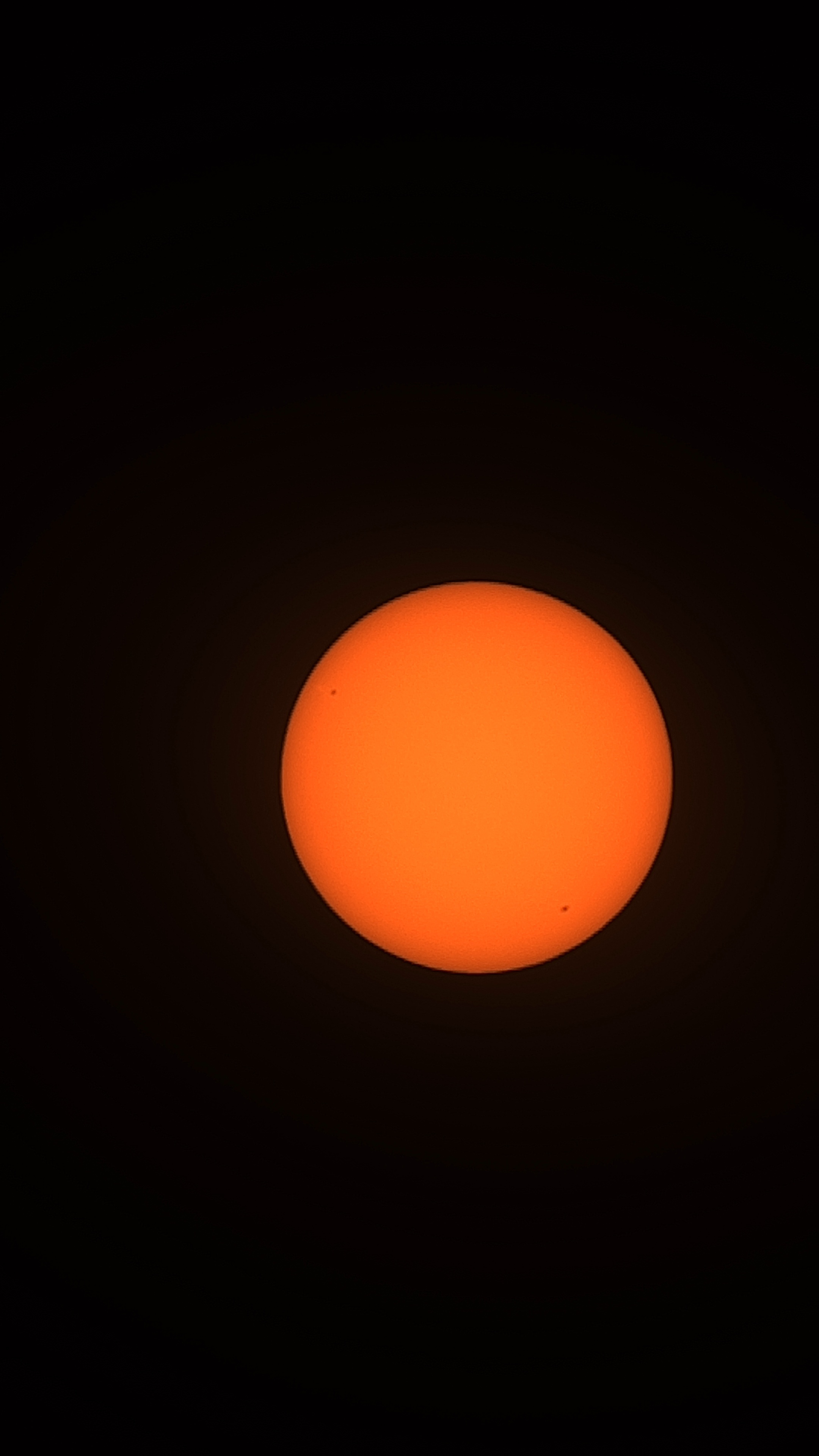
Without digital zoom, the circular solar disk stands out sharply against the deep black background of space. On this overview shot, the larger spots (including region AR4482 near the upper section) remain clearly visible as dark dots on the otherwise uniformly bright photosphere.
The dark spots on the sun are not holes; they are a fascinating result of magnetism and thermodynamics:
As a licensed radio amateur (callsign DO3EET), I track solar activity for more than just visual appeal. Sunspots have a direct and major impact on our hobby:
Testing the solar filter was a fantastic experience. The combination of the safe, simple magnetic mount and the app’s intelligent solar search makes observing the sun with the ZWO Seestar S30 Pro incredibly easy and completely safe. Whether for a quick look during the day or preparing for astronomical highlights like eclipses, the system works flawlessly.
Note: On August 12, 2026, a partial solar eclipse will occur, which will be visible with high coverage in Germany. With the Seestar S30 Pro and the solar filter, you are perfectly prepared for this event!
Have you had any experience with solar observation, or have you managed to capture the sunspots of the past few weeks with your setup? Let me know in the comments below!
Lang verschollenen Tux gefunden
Der Geist der CLT2026 lebt! 🐧✨
Ich bin Frank. Ein Informatiker und Funkamateur aus Deutschland. Außerdem reise ich gern nach Japan.
By Frank Tornack,
Screen Burn-In
Glückwunsch! Deine Pixel sind jetzt offiziell eins mit meiner Website. 📺✨